It’s November 2025, and the dust has finally settled from Apple’s latest Keynote. You are likely standing at a crossroads that every Apple fan faces eventually: do you splurge on the shiny new iPhone 17, or do you save some cash and grab the still-capable iPhone 16?
For years, the “base” iPhone models felt like they were lagging behind their Pro siblings, particularly when it came to the screen. But this year, the script has flipped. Our comprehensive iPhone 17 vs iPhone 16 comparison reveals that the gap between the standard and Pro models has never been smaller. Apple has finally brought some of its most requested “Pro” features to the entry-level flagship, making this year’s decision tougher than ever.
In this guide, we aren’t just looking at spec sheets. We’re diving deep into the real-world differences—from the long-awaited arrival of ProMotion to the AI-powered capabilities of the A19 chip—to help you decide which device deserves a spot in your pocket.
Contents
- 1 1. Design and Display: The 120Hz Revolution
- 2 2. Camera System: A Selfie and Ultra-Wide Overhaul
- 3 3. Performance: A19 vs. A18 Chip
- 4 4. Battery Life and Charging Speeds
- 5 5. Storage and Value Proposition
- 6 6. Aesthetic and Build: The New Colors
- 7 7. Software Longevity: iOS 19 and Beyond
- 8 Comparison Table: At a Glance
- 9 The Verdict: Should You Upgrade?
- 10 Comparison Video Review
1. Design and Display: The 120Hz Revolution
If there is one section of this iPhone 17 vs iPhone 16 comparison that should grab your attention, it is this one. For the first time in history, the base iPhone display doesn’t feel like a compromise.
The Refresh Rate Debate Ends
For years, tech enthusiasts (rightfully) complained that paying nearly $800 for a 60Hz screen in 2023 or 2024 was unacceptable. The iPhone 16 stuck to that 60Hz limit. However, the iPhone 17 has finally introduced ProMotion technology to the non-Pro lineup.
What does this mean for you?
- iPhone 17: Features a variable 1-120Hz refresh rate. Scrolling through Instagram is buttery smooth, system animations feel instantaneous, and gaming is far more responsive. Plus, it enables the Always-On Display—a feature previously gatekept for the Pros.
- iPhone 16: Locked at 60Hz. It’s still a beautiful OLED panel, but once you see the 120Hz motion on the 17, it is very hard to go back.
Size and Brightness
Apple has also slightly tweaked the dimensions. The iPhone 17 features a 6.3-inch display, up from the 6.1-inch screen on the iPhone 16. While 0.2 inches sounds negligible on paper, in hand, it offers just enough extra breathing room for your emails and TikTok feeds without feeling like a “Max” sized brick.
Outdoor visibility has also seen a massive jump. The iPhone 17 hits a peak outdoor brightness of 3,000 nits, obliterating the 2,000 nits limit of the iPhone 16. If you live in a sunny state like California or Florida, this upgrade alone is a lifesaver.
Ceramic Shield 2 vs. The Original
Durability is always a concern. The iPhone 17 introduces Ceramic Shield 2, which Apple claims is 3x more scratch-resistant than the glass found on the iPhone 16. Additionally, the new model includes an anti-reflective coating baked directly into the glass, significantly reducing glare under harsh office lighting.
2. Camera System: A Selfie and Ultra-Wide Overhaul
When we look at the camera specs in this iPhone 17 vs iPhone 16 comparison, the rear main sensor tells only half the story. The real magic this year is happening in the secondary lenses.
The Selfie Camera Glow-Up
Do you take a lot of selfies or spend hours on FaceTime? The iPhone 17 is the clear winner here.
- iPhone 17: Sports a new 18MP front camera with a square sensor and OIS (Optical Image Stabilization). It also supports Center Stage, automatically keeping you in the frame during video calls even if you move around the room.
- iPhone 16: Uses the older 12MP sensor. It’s decent, but it lacks the sharpness and dynamic range of the new 18MP shooter, especially in low light.
Ultra-Wide Gets Huge
The Ultra-Wide camera has historically been the “weak link” on base iPhones. The iPhone 16 used a 12MP Ultra-Wide sensor, which often resulted in soft edges and noisy night shots.
The iPhone 17 changes the game with a massive 48MP Ultra-Wide camera. This allows for “pixel binning,” where the camera combines pixels to gather more light. The result? Your landscape shots and group photos will look significantly sharper, and Macro photography (close-ups) is far more detailed.
The “Fusion” Main Camera
Both phones rock a 48MP main sensor, but the iPhone 17 utilizes Apple’s new “Fusion” processing pipeline. It captures images faster, reducing motion blur in shots of active kids or pets. While the iPhone 16 takes stunning photos, the iPhone 17’s color science feels a bit more natural, moving away from the “over-processed” HDR look that plagued some older models.
3. Performance: A19 vs. A18 Chip
At the heart of any iPhone 17 vs iPhone 16 comparison is the silicon. Apple’s chips are usually so far ahead of the competition that comparing them feels like splitting hairs, but this year, the focus is on efficiency and AI.
The A19 Advantage
The iPhone 17 is powered by the A19 chip, built on an enhanced 3nm process (rumored to be N3P).
- Speed: Benchmark tests show about a 15-20% boost in multi-core performance over the A18 found in the iPhone 16.
- Thermal Management: The A19 runs cooler. If you are a mobile gamer who plays titles like Genshin Impact or Resident Evil, you will notice the iPhone 17 sustains high frame rates for longer before dimming the screen due to heat.
Apple Intelligence and RAM
Both devices are built to handle Apple Intelligence features like writing tools, Genmoji, and notification summaries. Both the iPhone 16 and iPhone 17 come with 8GB of RAM, which is the minimum requirement for these on-device AI tasks.
However, the A19’s Neural Engine is significantly beefier. In daily use, this means Siri responds faster on the iPhone 17, and on-device photo editing (like removing objects from a background) happens almost instantly, whereas the iPhone 16 might take a second or two to process.
4. Battery Life and Charging Speeds
We can’t talk about a phone upgrade without discussing battery anxiety. This is another area where the iPhone 17 takes a confident lead.
The 30-Hour Threshold
Apple’s official stats claim the iPhone 17 can hit up to 30 hours of video playback. Compare that to the iPhone 16’s 22 hours, and you’re looking at a massive generation-over-generation leap.
How did they do it? The slightly larger chassis of the iPhone 17 (thanks to that 6.3-inch screen) allowed engineers to fit a physically larger battery. Combined with the power efficiency of the ProMotion display (which ramps down to 1Hz when static), the iPhone 17 is a true two-day phone for light users.
Faster Wired Charging
Finally, the iPhone 17 supports 40W wired fast charging.
- iPhone 17: 0% to 50% in about 20 minutes (with a proper brick).
- iPhone 16: Capped around 25W speeds, taking about 30 minutes to hit 50%.
If you are the type of person who forgets to charge their phone until 15 minutes before leaving the house, the iPhone 17’s faster charging speed is a legitimate quality-of-life improvement.
5. Storage and Value Proposition
Here is the hidden “feature” that many reviews miss in their iPhone 17 vs iPhone 16 comparison.
The Base Model Shift
For the iPhone 16, the $799 base model came with 128GB of storage. In 2024/2025, with 4K video and heavy apps, 128GB fills up terrifyingly fast.
The iPhone 17 keeps the $799 starting price but starts at 256GB.
Technically, this is a $100 price cut in disguise. If you were to buy an iPhone 16 today, you’d likely pay extra to upgrade to the 256GB tier. With the iPhone 17, you get that storage by default, plus all the screen and camera upgrades, for the same sticker price.
Read Also: iPhone 17 vs iPhone 16: 5 Ultimate Reasons the Upgrade is a Game-Changer
6. Aesthetic and Build: The New Colors
Apple refreshes its color palette every year, and the iPhone 17 lineup is arguably more sophisticated than the saturated tones of the iPhone 16.
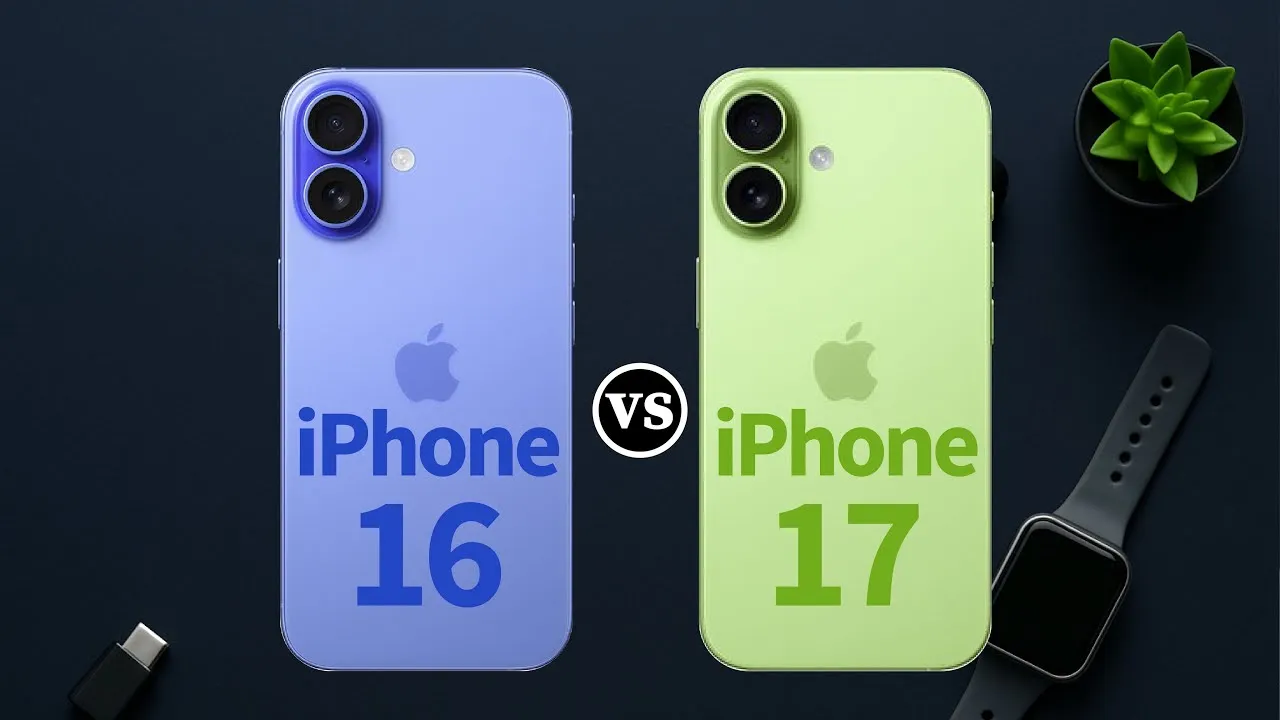
- iPhone 17 Colors: Lavender, Sage, Mist Blue, White, and Black. The “Sage” green is the standout this year—it’s a subtle, earthy tone that looks very premium.
- iPhone 16 Colors: Pink, Teal, Ultramarine, White, and Black. The iPhone 16 colors are punchier and more vibrant.
The build materials remain similar—aerospace-grade aluminum frames with glass backs—but the iPhone 17 feels slightly more dense and premium in the hand due to the slight weight increase (177g vs 170g).
7. Software Longevity: iOS 19 and Beyond
While both phones currently run the latest software, the iPhone 17 gives you an extra year of future-proofing.
- iPhone 17: Will likely receive updates through 2030 or 2031.
- iPhone 16: Will likely lose support around 2029 or 2030.
If you are someone who holds onto their phone for 4+ years, the newer chipset in the iPhone 17 ensures that it will handle the increasingly demanding features of iOS 20, 21, and 22 much smoother than the iPhone 16 will.
Comparison Table: At a Glance
| Feature | iPhone 17 | iPhone 16 |
| Display | 6.3″ ProMotion (120Hz) | 6.1″ (60Hz) |
| Processor | A19 Chip (3nm+) | A18 Chip (3nm) |
| Base Storage | 256GB | 128GB |
| Rear Camera | 48MP Main + 48MP Ultra-Wide | 48MP Main + 12MP Ultra-Wide |
| Selfie Camera | 18MP with OIS | 12MP |
| Battery Life | Up to 30 Hours Playback | Up to 22 Hours Playback |
| Charging | 40W Wired | ~25W Wired |
| Price | Starts $799 | Starts $699 (Price Drop) |
The Verdict: Should You Upgrade?
After dissecting every aspect of the iPhone 17 vs iPhone 16 comparison, the conclusion is clearer than it has been in years.
Buy the iPhone 17 if:
- You value a high-quality display: The jump from 60Hz to 120Hz ProMotion is the single most noticeable upgrade in day-to-day use. Once you see it, you can’t unsee it.
- You need storage: The 256GB base storage makes the $799 price tag an incredible value.
- You are a heavy user: The 30-hour battery life and 40W fast charging will change how you use your phone.
Buy the iPhone 16 if:
- Budget is your #1 priority: With the release of the 17, the iPhone 16 has dropped to $699 (and often lower with carrier deals). It is still a fantastic phone with a great camera and full Apple Intelligence support.
- You don’t care about refresh rates: If you honestly can’t tell the difference between 60Hz and 120Hz (and some people truly can’t), you can save the money.
Apple has finally blurred the line between “Regular” and “Pro.” The iPhone 17 isn’t just a basic upgrade; it’s the phone that makes the Pro model harder to justify for the average user.
For more detailed specs and to purchase directly, you can visit the official Apple iPhone Compare Page.
Comparison Video Review
To see the ProMotion display in action and get a visual sense of the new “Sage” color, check out this in-depth review:
This video provides a great visual breakdown of the 120Hz display difference and the new camera capabilities mentioned in our article.
***